
Teaching Children About Diversity:
Why Inclusion Starts in Early Childhood
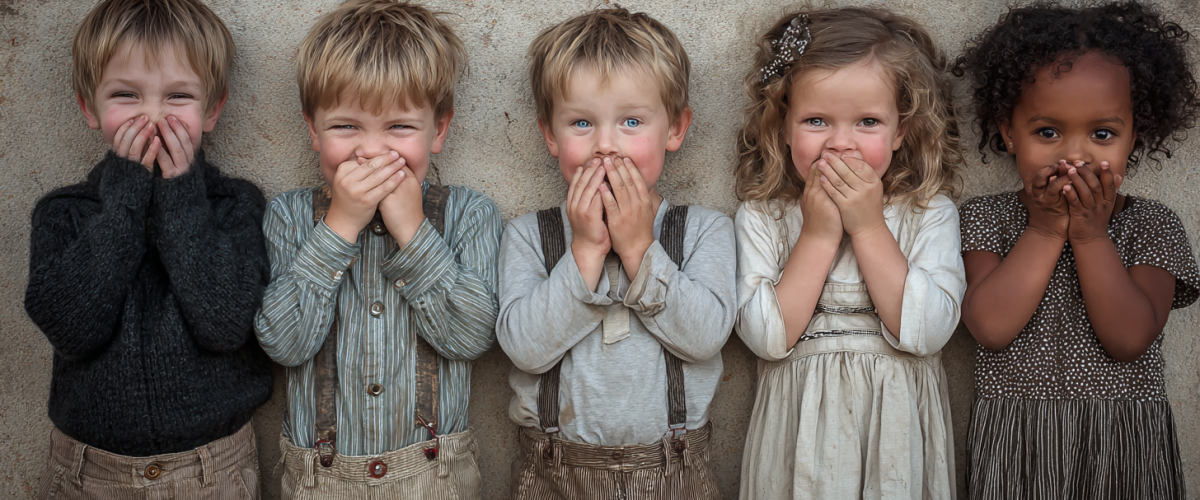
As teacher Jane Elliott famously said, there is only one race—the human race. This simple truth is an important starting point when we think about how children learn about diversity and inclusion.
In today’s interconnected world, raising inclusive children has become an important topic for parents. As parents we can show our children in everyday moments how diversity is part of our lives now.
Unfortunately there are still many divisions. Divisions of different cultures, religions, looks and languages. It would be naive to believe that divisions can be abolished.
My family is diverse. My mother is from Belgium, my father is German, I married an Englishman and my son has married a French girl. We also have family in the US. Although we have similar cultures, we still have different opinions about certain topics.
Are we really all that tolerant towards everybody and everything? Sometimes we have to examine us deeply to identify any hidden prejudice we might have towards others or circumstances. Before we teach our children about inclusion we need to have a good look at ourselves.
Children Are Not Born With Bias
Children are naturally open-minded. From an early age, they notice differences in appearance, culture, traditions, and beliefs. They do not attach judgment to those differences. Young children do not instinctively judge others based on skin colour, physical features, family customs, or religion. When prejudice appears, it is learned through exposure and experience rather than something children are born with.
Prejudice is leaned rather than inherited. Children are sensitive to cues on how to understand the world. These cues come from their environment. There is so much information coming from the media which gets absorbed. We have no control over the media and over what other people say, but we can limit the kid’s exposure to unwanted external messages and see how we ourselves communicate with then.
Familiarity Is Not Prejudice
It is common for children to gravitate toward others who look or feel familiar to them. This behaviour is often misunderstood as bias, but in reality, it reflects comfort and recognition. Children feel safe when they see aspects of themselves in others, and this sense of familiarity helps them build early social connections.
Seeing themselves mirrored in others whether through language, shared experiences, or physical resemblance can create an immediate sense of safety. It is a normal part of growing up.
As mentioned earlier, I spoke English in a very German speaking environment in Germany. There was one American girl who lived near me. She became my best friend. I was devastated when she moved back to the US. She was somebody who understood me literally. We had the language in common which was huge. When she left I felt rather alone until much later when I picked up German and made friends with German kids.
Growing Up in a Diverse World
We live in an increasingly diverse society, and children are exposed to this diversity long before they enter school. Books, television, images, and everyday interactions all contribute to how children understand the world around them. Parents, caregivers, and close family members play a particularly influential role in shaping children’s attitudes toward difference. Children observe how adults respond to differences through language, body language, humour and everyday interactions. Casual remarks and gestures all communicate messages about belonging.
Encouraging Questions and Conversations
As children encounter diversity, they will naturally begin to ask questions. These moments provide valuable opportunities for discussion. Talking openly and honestly about what children see and experience helps them develop understanding, empathy, and respect for others.
When conversations about race, culture, religion, disability and family structures occur naturally, children begin to associate difference with understanding and empathy rather than discomfort.
Teaching Acceptance and Belonging
When we regularly discuss diversity with children and reinforce the idea that there is no single way to look, live, or be, we help them build confidence and compassion. Children who are encouraged to embrace differences are more likely to accept themselves and others. Most importantly, they learn that despite our many differences, we are all part of the same world and we all belong.
When I grew up in Germany, we spoke English at home. My mother did not speak German and my father did not speak French. When I started school, my German was not very good. I was different and I got bullied at school.
I did not understand why because being brought up with two languages was normal to me. It was not the easiest of times. I did not understand then that being bilingual could could have some advantages. Back then I wanted to be like everybody else. I was always the odd one out. Thankfully today things have changed. My experience would probably be completely different.
The blog is written by me,
AI is used only as an editing assistant.