
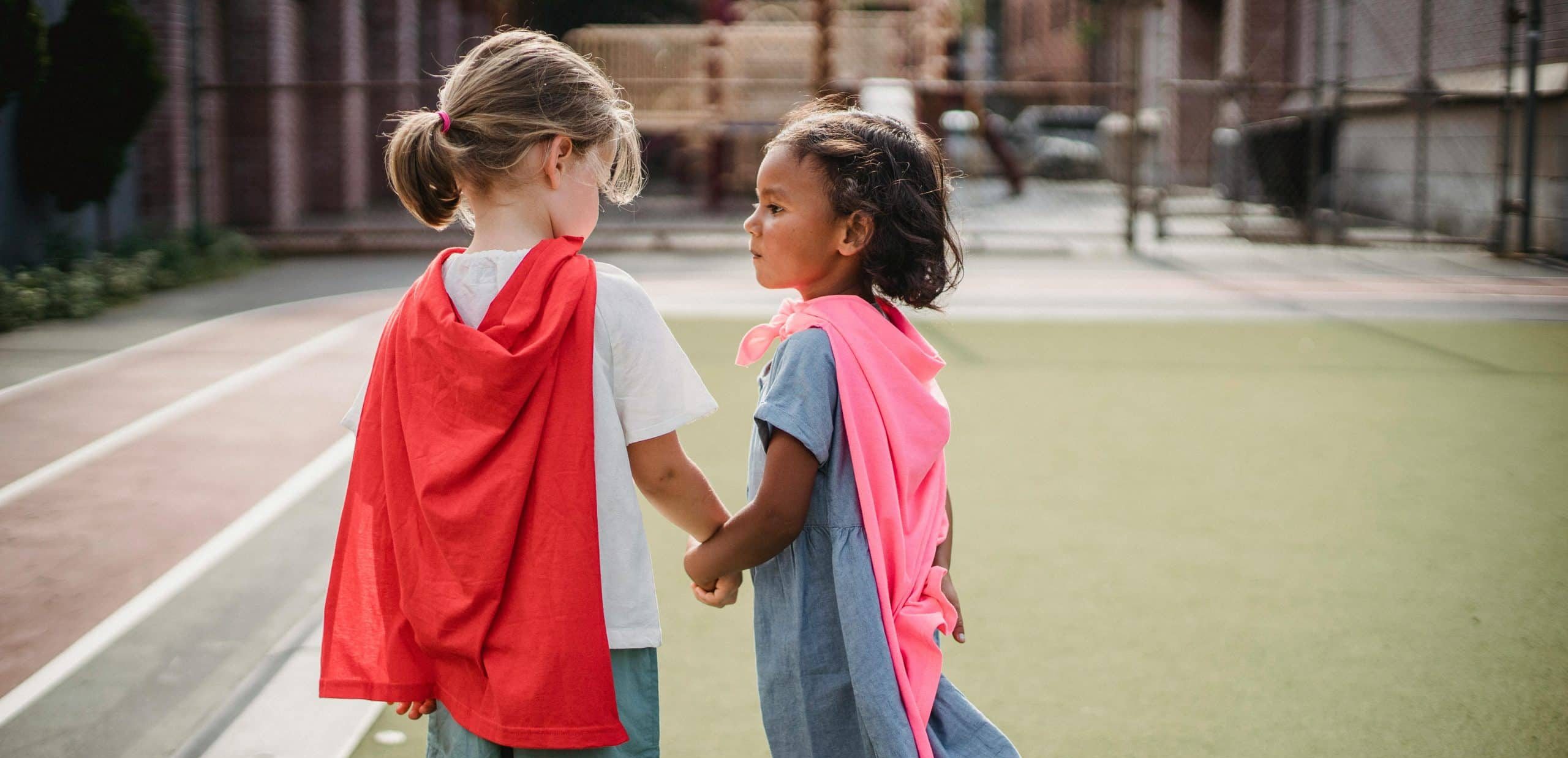
How to raise Inclusive Children: Teaching Kids about Diversity, Empathy and Belonging
Children are not born with prejudice, but they absorb it. Here’s how parents can raise inclusive children by nurturing open-mindedness, empathy, and a genuine sense of belonging from the very beginning.
As teacher Jane Elliott famously said: “There is only one race, the human race.” This simple truth is an important starting point when we think about how children learn about diversity and inclusion. In today’s interconnected world, raising inclusive children has never been more important. As parents, we can show our children in everyday moments how diversity is already woven into our lives. And yet divisions remain divisions of culture, religion, appearance and language. It would be naïve to believe they can simply be abolished.
My own family reflects this. My mother is from Belgium, my father is German, I married an Englishman, and my son has married a French woman. We also have family in the US. Though our cultures overlap, we still hold different views on certain topics.
Which raises a question worth thinking about: Are we really as tolerant as we like to think? Before we teach our children about inclusion, we need to take a good, honest look at ourselves and identify any hidden biases we may carry.
Children are not born with bias
Children are naturally open-minded. From an early age, they notice differences in appearance, culture, traditions and beliefs, but they do not attach judgement to those differences. Young children do not instinctively judge others based on skin colour, physical features, family customs or religion.
Children learn prejudice through exposure, language and experience they are not born with it. Children are sensitive to the cues they receive about how the world works. Those cues come from family, community and media. While we cannot control everything they absorb, we can be intentional about how we communicate at home.
Familiarity is not the same as prejudice
It is common for children to gravitate toward others who look or feel familiar to them. Adults often misread this behaviour as bias, but in reality it reflects comfort and recognition. Children feel safe when they see aspects of themselves in others, and this sense of familiarity helps them build early social connections.
Seeing yourself mirrored in others through shared language, experiences or even physical resemblance creates a natural sense of safety. It is a normal part of growing up.
I experienced this myself. Growing up in Germany, I spoke English at home in a largely German-speaking environment. There was one American girl who lived nearby and she became my best friend someone who understood me, literally. When she moved back to the US, I felt alone until I eventually learned German and made friends with local children.
Growing up in a diverse world
Children encounter diversity long before they enter school. Books, television, images and everyday interactions all shape how they understand the world around them. Parents, caregivers and close family members play a particularly influential role in forming children’s attitudes towards differences. Children observe how adults respond to differences through language, body language, humour and everyday behaviour. Casual remarks and small gestures all communicate powerful messages.
How to encourage questions and open conversations about diversity
As children encounter diversity, they will naturally begin to ask questions and these moments are valuable. Talking openly and honestly about what children see and experience helps them develop understanding, empathy and respect for others.
When conversations about race, culture, religion, disability and different family structures happen naturally without shame or awkwardness children begin to associate difference with curiosity and empathy rather than discomfort.
Teaching children acceptance, belonging and self-confidence
One of the most powerful things we can do as parents is to raise inclusive children who feel confident celebrating both their own identity and the identities of others. When we regularly discuss diversity with children and reinforce the idea that there is no single way to look, live or be, we help them build both confidence and compassion. Children who learn to embrace differences are more likely to accept themselves and others.
Most importantly, they learn that despite our many differences, we all belong to the same world.
When I was young, nobody talked much about diversity. As the odd one out, I felt it deeply. Bullies targeted me at school because my German wasn’t fluent, and I couldn’t understand why being bilingual was seen as strange to me, it was simply normal. More than anything, I wanted to fit in.
Thankfully, things have changed. Today, society widely celebrates bilingualism, and a childhood like mine would likely be a very different experience. That shift did not happen by accident it happened because we travel more, see more and live in a more diverse world. Even so, we still have a long way to go. Bilingualism is only a small part of the big picture. So many more differences need open discussion, which is why talking to our children about diversity is the first step towards changing prejudice.
If you would like to read to your children about diversity, the following article in School Reading List recommends several books. You can also read my blog on how our children are always watching us. We teach them about diversity not only in what we say, but also how we behave.